
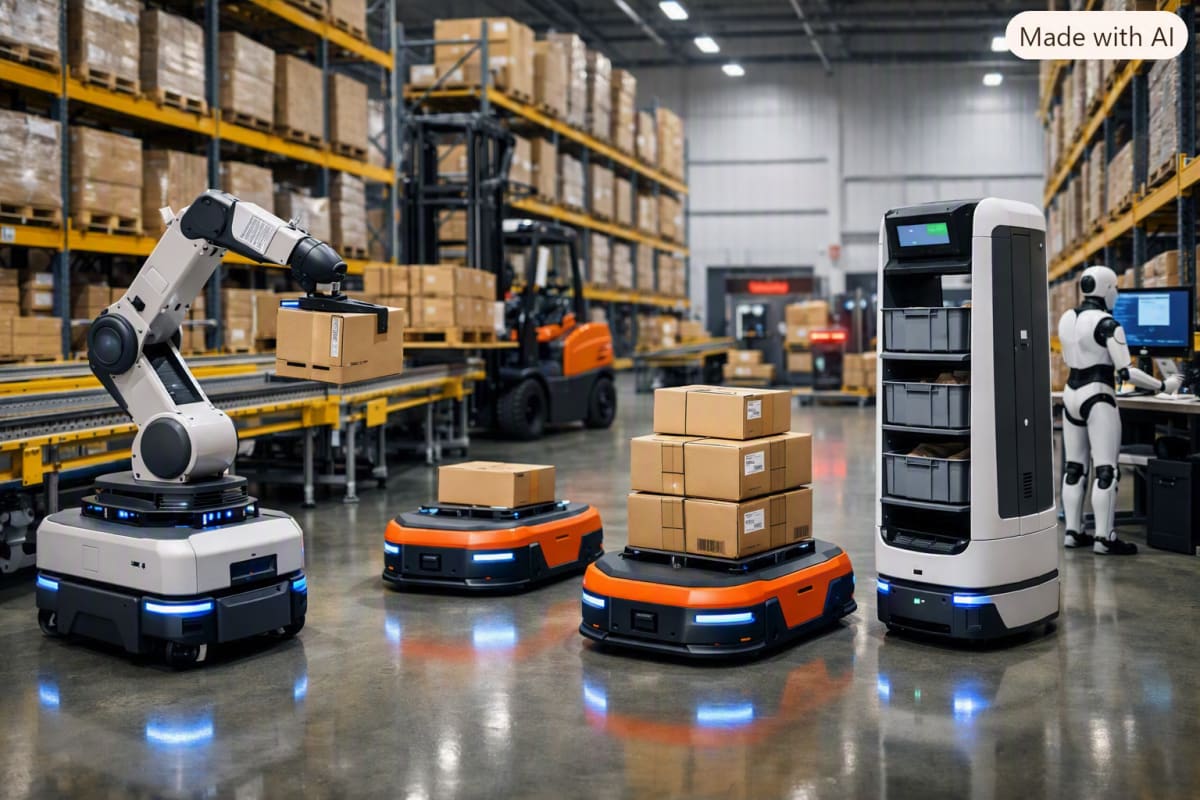
The warehouse logistics industry is entering a new era driven by intelligent automation. Autonomous Mobile Robots (AMRs) are rapidly transforming how warehouses operate by streamlining inventory movement, improving operational efficiency, and supporting faster order fulfillment. As supply chains become more complex and customer expectations continue to rise, businesses are increasingly adopting AI-powered robotics to enhance productivity and reduce operational costs.
Industry forecasts suggest the global Autonomous Mobile Robot warehouse logistics market will reach $24.67 billion by 2030, growing at a compound annual growth rate (CAGR) of 21.1%. This growth reflects increasing investment in warehouse automation, artificial intelligence, and digital supply chain technologies.
Several key factors are fueling market expansion. AI-powered warehouse orchestration systems are enabling real-time coordination between robots, inventory, and warehouse management systems, allowing businesses to optimize workflows with greater precision. At the same time, the continued growth of e-commerce and omnichannel retail is placing greater pressure on distribution centers to process and deliver orders more quickly than ever before.
Modern AMRs are designed to navigate warehouses autonomously, transport goods safely, and work alongside human employees. Their ability to reduce manual handling, minimize errors, and improve operational flexibility makes them an attractive investment for retailers, manufacturers, logistics providers, and third-party warehouse operators.
The expansion of omnichannel fulfillment centers is also driving demand for flexible automation solutions. Unlike traditional warehouse systems, autonomous mobile robots can adapt to changing warehouse layouts and fluctuating order volumes without requiring extensive infrastructure modifications.
Beyond productivity improvements, AMRs contribute to higher inventory accuracy, better space utilization, enhanced workplace safety, and lower operating costs. These benefits are encouraging organizations worldwide to accelerate their digital transformation initiatives and build more resilient supply chains.
Looking ahead, continued advances in artificial intelligence, robotics, machine vision, and cloud-based warehouse management systems are expected to further strengthen the role of autonomous mobile robots. As businesses focus on creating faster, smarter, and more sustainable logistics operations, AMRs will remain a key technology shaping the future of warehouse automation.
Autonomous Mobile Robot Warehouse Logistics Market to Reach $24.67 Billion by 2030 as AI Transforms Global Supply Chains
Published 3rd September 2026